





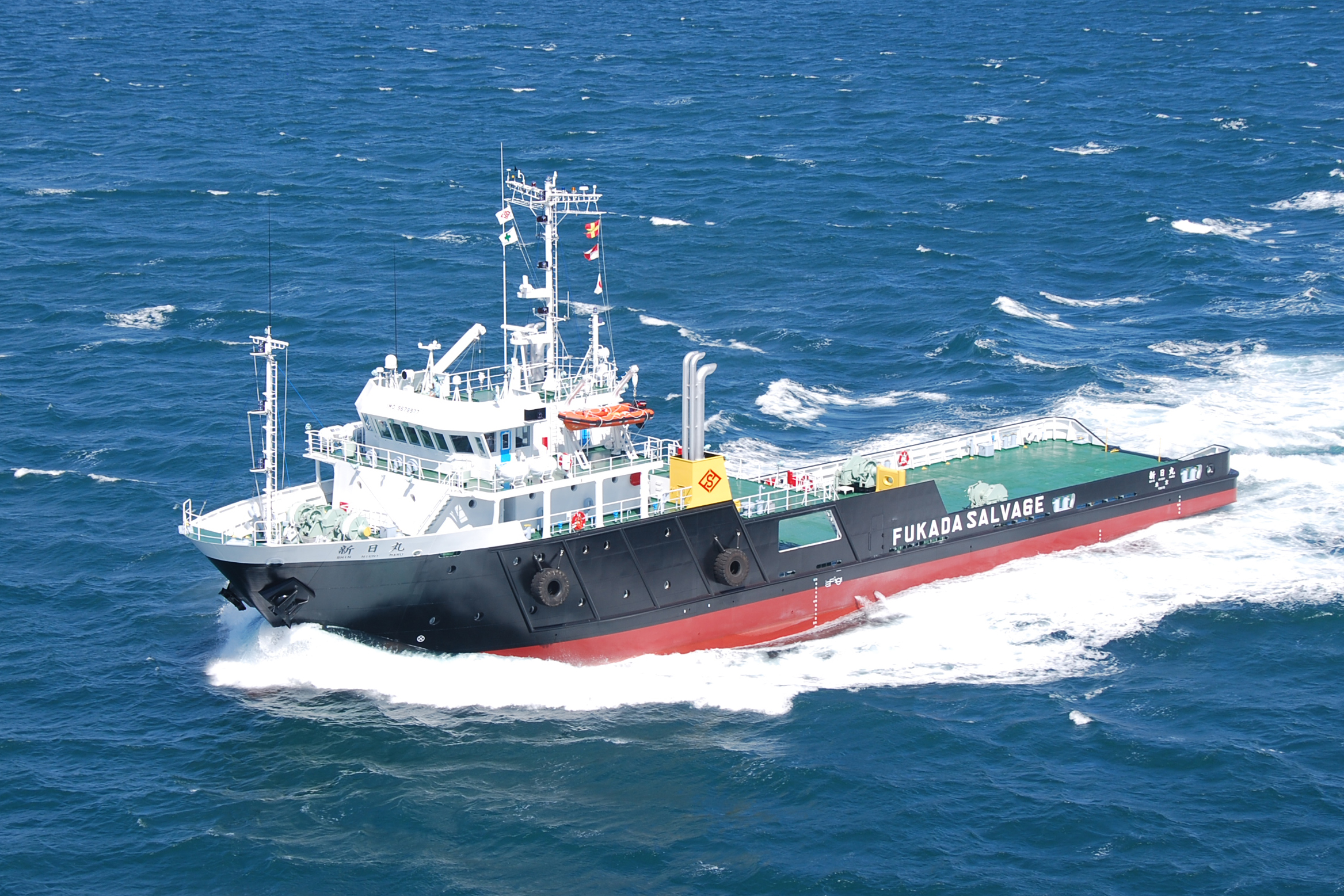
Shinnichi Maru
Tug, Salvage, and Work Vessel (697GT)
Shinnichi Maru is a multipurpose work vessel equipped with a DP system (dynamic positioning system) and an onboard crane. It supports seafloor surveys as the mother vessel for ROV Hakuyo, and also handles heavy-lift lowering operations.
Under a management structure that emphasizes daily inspection and maintenance, the vessel ensures safety and reliability while supporting smooth operations in the field.
-
Principal Dimensions
LOA 61.01 m, Moulded B 11.80 m, Moulded D 5.48 m, DFL 4.71 m
-
Persons on Board
8 crews/others
-
Navigation Area
Major coasting area (International voyage)
-
DPS
Kongsberg DP Class I
-
Propulsion System
Niigata ZP-31CP four-wing CPP x 2
-
Thruster
Bow thruster 8.4 t x 1
-
Main Engine
Niigata 6L28HX 2,000PS×2
-
Generator
Yanmar 6AYL-WET 668PS x 3
How Shinnichi Maru Works
ROV Mother Vessel Support (Support for Remotely Operated Vehicle Operations)
The vessel is operated as the mother vessel for Hakuyo, a remotely operated vehicle (ROV). Hakuyo is a work-class ROV equipped with two manipulators and supports a wide range of underwater operations, including seafloor surveys, inspection of underwater structures, and sample recovery.
On the mother vessel side, ROV launch and recovery, remote operation, and monitoring are carried out in an integrated manner, supporting a variety of offshore projects.
DP (Dynamic Positioning)
This system integrates thrusters, propellers, and rudders under computer control to automatically maintain the vessel’s position and heading without using anchors. It is essential for operations requiring precise station keeping, such as ROV launch and recovery and standby operations in survey areas.
Z-Peller Azimuth Thrusters and Thrusters
The vessel is equipped with Z-Peller azimuth thrusters and thrusters. Because thrust direction can be controlled freely, the system provides high maneuverability and supports precise station keeping in combination with the DP system. It contributes to agile maneuvering in confined waters and stable position keeping in survey areas.
Towing Equipment (Towing Winch)
The vessel is equipped with a towing winch for marine towing operations involving barges and structures. The winch pays out and retrieves the towline while controlling line tension, enabling safe and stable towing operations.
Deck Space and A-Frame
The vessel has deck space for loading and maintaining ROV-related equipment and umbilical cables, and is equipped with an A-frame at the stern. The A-frame is a portal-type structure used to safely launch and recover heavy objects over the stern, and can handle not only ROVs but also various types of underwater equipment.
Accommodation Facilities (up to 40 persons)
The vessel can accommodate up to 40 persons, including project personnel. In addition to ROV survey operators and engineers, customer survey personnel can also board the vessel, providing accommodation suitable for extended offshore survey projects.
Onboard Crane
The vessel is equipped with an onboard crane with a maximum lifting capacity of 5 tons. It supports everyday offshore handling work, including loading and unloading ROV-related equipment and survey equipment, as well as repositioning items on deck. It is practical equipment that supports agile handling of materials and equipment.
Key Features
Shinnichi Maru’s defining feature is that it combines ROV work support capability provided by its DP system with the ability to handle materials and equipment flexibly using its onboard 5-ton crane.
As the mother vessel for ROV Hakuyo, it supports precision surveys on the deep seafloor, while also handling installation and recovery of equipment using its crane. In both types of operation, stable station keeping by the DP system supports accuracy and safety.
The vessel is operated under a management structure that thoroughly emphasizes daily inspection and maintenance, and has accumulated a record of stable operation over many years. Flexible capability to respond to diverse projects and reliable operational quality are key
WORKS
-
Battleship Yamato Survey
In May 2016, an underwater imaging survey of the battleship Yamato was conducted using an underwater robot (ROV).
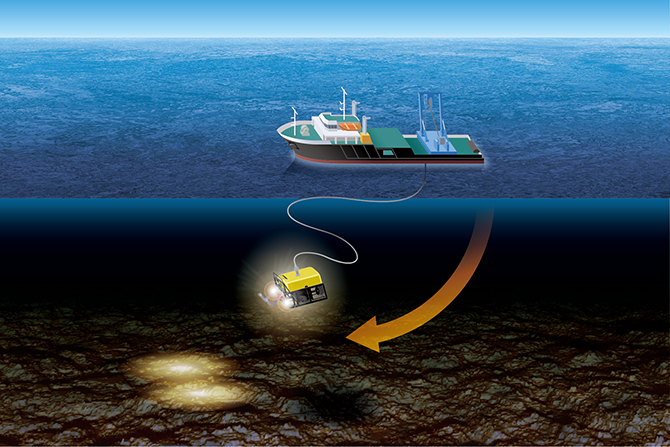
The underwater robot (ROV) is deployed. Crew members assist with the deployment work.
*Robot and drill operations are conducted by an onboard specialist team.
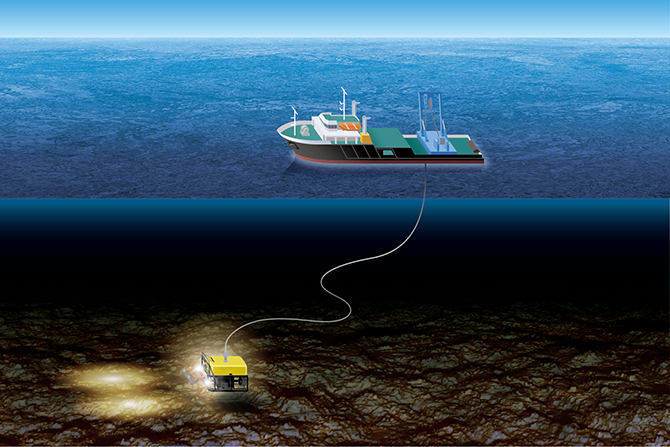
The underwater robot (ROV) captures images. The navigator uses the DP system to maneuver the vessel so that the cable does not break.
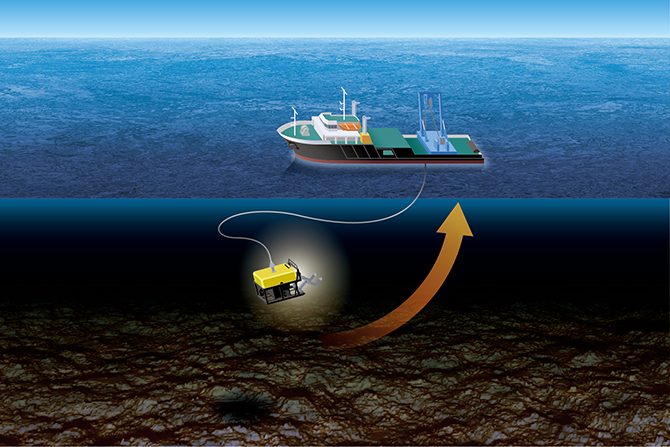
After imaging is completed, the underwater robot (ROV) is recovered. Crew members assist with the recovery work.
CLOSE
-
Recovery of Floating Fish Aggregating Devices
Floating artificial reefs installed in the midwater zone are recovered using a remotely operated vehicle (ROV).
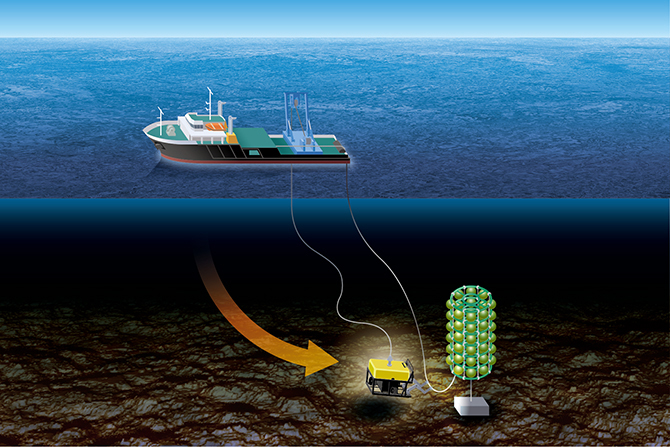
A remotely operated vehicle (ROV) is deployed to cut the mooring line of the floating artificial reef, which is then recovered.
*The ROV is operated by a specialist team on board the vessel.
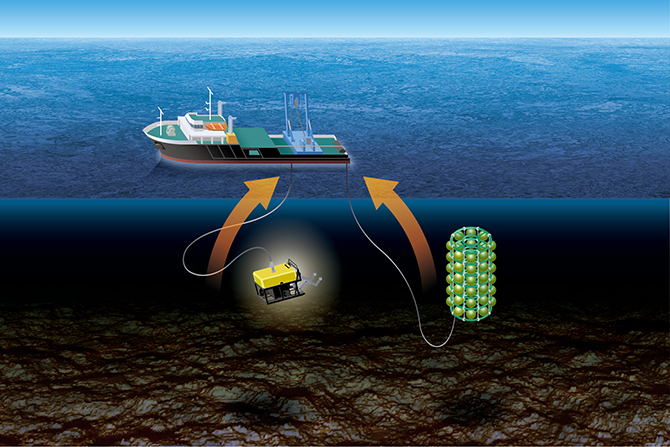
The mooring line is hauled in using a winch.
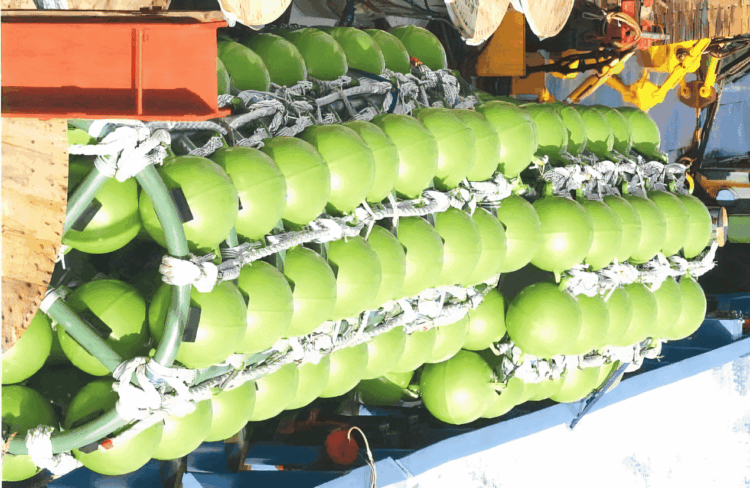
Floating Fish Aggregating Devices
CLOSE