





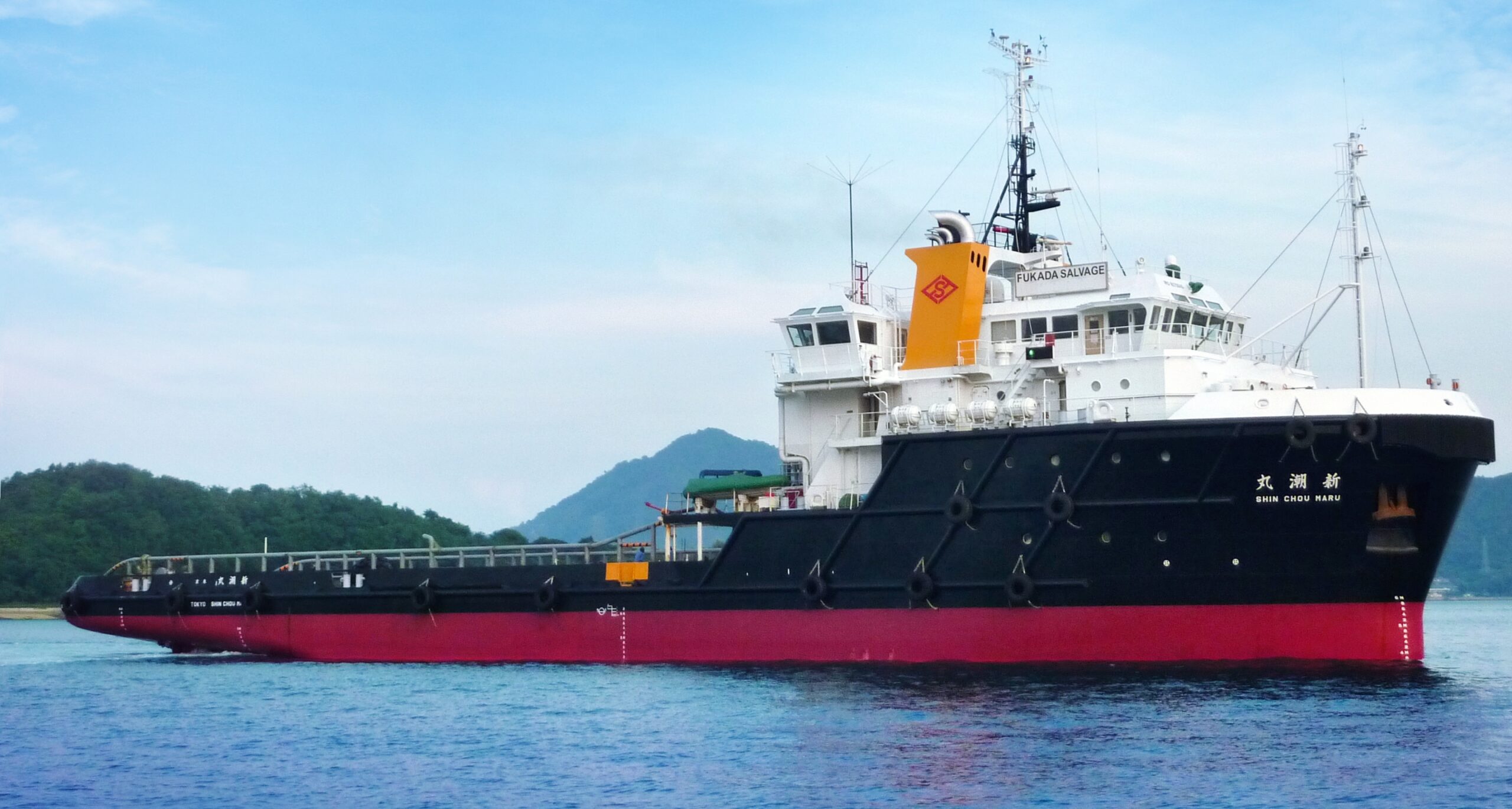
Shinchou Maru
Tug, Salvage, Work, and Survey Vessel (2,096GT)
Shinchou Maru is a multipurpose work vessel supporting a broad range of operations, from towing and salvage to marine surveys. Equipped with a dual DP system for high-precision station keeping, the vessel can operate steadily even in challenging offshore work environments.
With an emphasis on dependability rather than showiness, it has consistently performed the roles required in the field.
-
Principal Dimensions
LOA 71.148 m, Moulded B 16.00 m, Moulded D 6.80 m, DFL 4.80 m
-
Persons on Board
12 crews/others
-
Navigation Area
Ocean going (International voyage)
-
DPS
Kongsberg DP Class II
-
Propulsion System
LIPS PROPELLER four-wing CPP x 2
-
Thruster
Bow thruster 11 t x 2, Stern thruster 9 t x 1
-
Main Engine
Wärtsilä W6L32 3, 750PS x 2
-
Generator
Caterpillar 3412TA 612PS x 3
How Shinchou Maru Works
DUAL DP
A system in which DP equipment is arranged in a dual-redundant configuration. As generators, thrusters, and control systems are separated into two or more independent systems, position keeping can continue even if a single failure occurs in one system.
This redundancy is required for projects involving high-precision operations such as offshore wind turbine installation and drilling, where any deviation from the required position could directly lead to a serious accident or damage to equipment.
Mother Vessel Support for Unicorn-1 (Support for Seafloor-Landing Boring Machine Operations)
Shinchou Maru serves as the mother vessel for Unicorn-1, a seafloor-landing boring machine capable of operating at depths of up to 3,000 meters. Equipped with a launch and recovery system (LARS), the vessel supports offshore deployment and operation of the system. Unicorn-1 is an unmanned drilling system that lands autonomously on the seafloor to perform coring and cone penetration testing (CPT), which is used for geotechnical surveys prior to the construction of offshore wind facilities, as well as for seafloor resource exploration.
The mother vessel is equipped with support equipment such as an active heave compensation (AHC) winch, A-frame, and control van, enabling integrated support for safe deployment and recovery, offshore data acquisition, and maintenance.
Towing Equipment
The vessel is equipped with a full set of towing equipment for marine towing operations involving large structures, barges, and other floating assets. The towing winch pays out and retrieves the towline while controlling line tension. The shark jaw secures the towline at the stern, while the tow pins provide points for connecting and leading out the towline.
Together, this equipment enables safe and stable towing, even in rough sea conditions.
Wide Working Deck with Wood Surface
The vessel offers a wide deck area that can be used flexibly for loading, temporary staging, and work involving equipment and materials.
Compared with an exposed steel deck, the wood-surfaced deck helps to reduce the risk of damage to equipment, materials, and cargo. Moreover, it provides better footing for workers, which helps to ensure a safer working environment on deck.
Fire Fighting System
The vessel is equipped with a firefighting system capable of delivering water externally to respond to fires at sea and support firefighting operations for nearby vessels and offshore structures.
Beyond protecting the vessel itself, the system also serves as an added layer of safety at offshore worksites.
Key Features
A defining feature of Shinchou Maru is its dual DP system. The two independent automatic station-keeping systems offer superior reliability in station keeping and help maintain safety by allowing offshore operations to continue even if one system fails. The vessel meets the high equipment-carrying and operational capability requirements of offshore projects.
It also has the capabilities of an anchor-handling tug/supply vessel (AHTS), which enables anchor retrieval and deployment, towing of large structures, and emergency towing.
Furthermore, its accommodation and operating capacity allow the personnel and equipment required for extended offshore work to be carried on board.
WORKS
-
Offshore Supply Operations
The vessel supplies and recovers materials, equipment, and provisions for offshore vessels, rigs, and other offshore facilities.
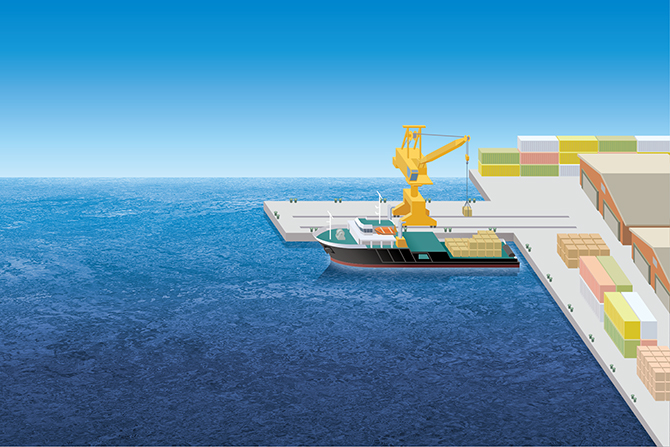
Materials such as containers, pipes, and cement are loaded on board.
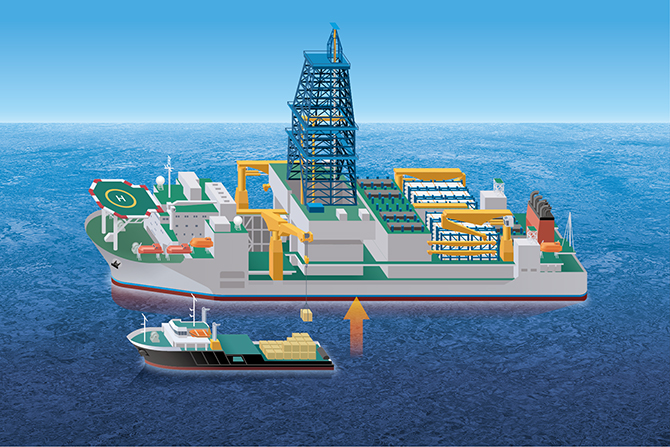
Offshore, the vessel uses its DP system to approach vessels, oil platforms, and other facilities and deliver the materials safely.
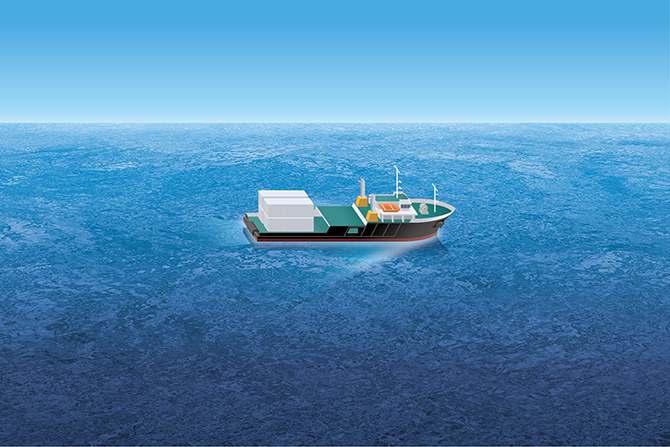
When recovered materials are received, the vessel transports them to the quay.
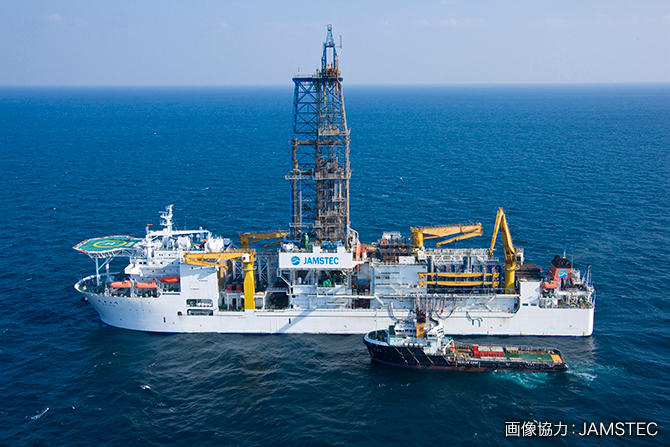
The vessel in operation
CLOSE
-
Salvage
The vessel tows disabled or grounded vessels to a designated port.
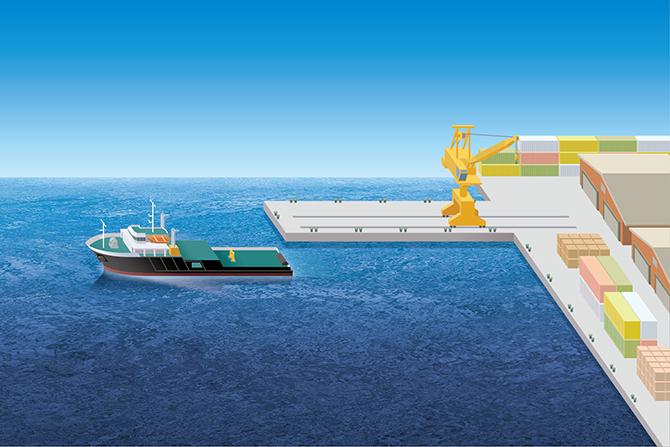
Upon receiving a salvage request, the vessel immediately begins preparations and departs for the site.
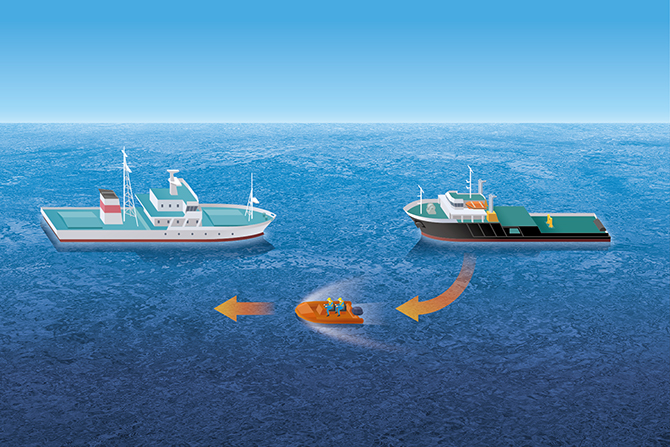
After arrival, deck and engine personnel work together to board the other vessel and connect the towline.
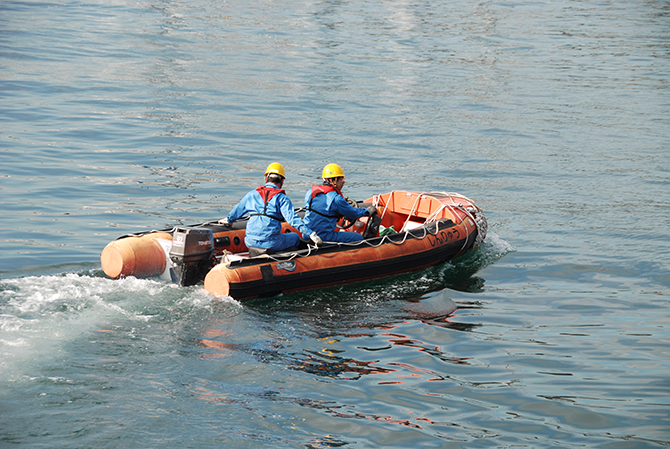
Crew members aboard a small boat
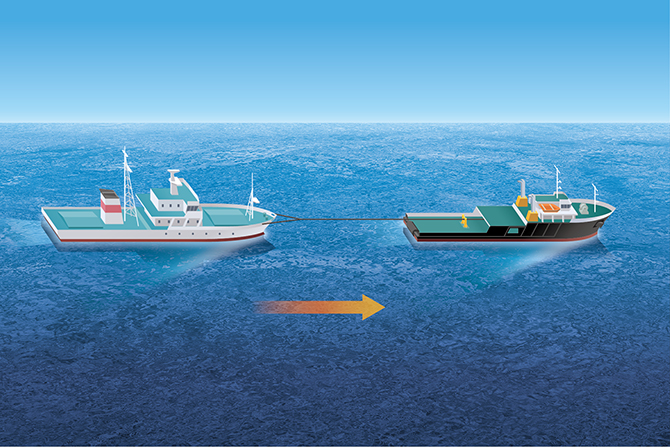
The disabled vessel is then towed to its destination.
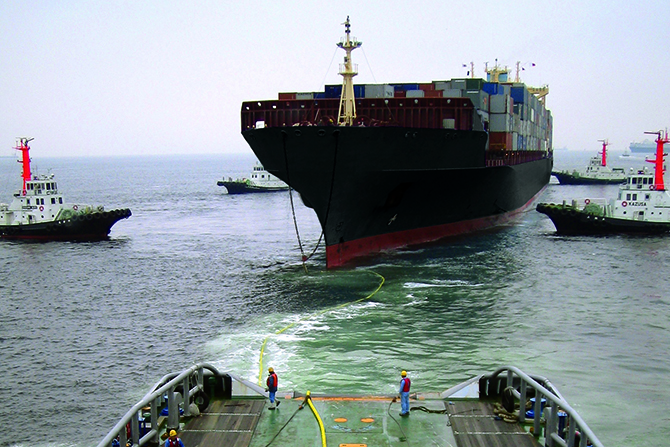
Large vessels can also be towed.
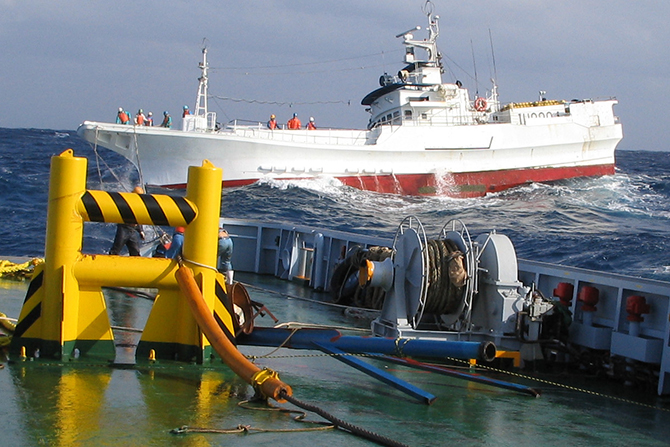
Operations may also be carried out in rough sea conditions.
CLOSE